6 Best MPPT Charge Controllers: How to Choose the Right One

If you're building or upgrading a solar power system, the charge controller is one of the most important components you'll choose. An MPPT charge controller (Maximum Power Point Tracking) manages how energy flows from your solar panels to your battery bank, and picking the right one directly affects how much solar power you actually get to use.
An MPPT solar charge controller works by constantly adjusting voltage and current to find the maximum power point of your solar array, the exact combination that pulls the most usable energy out of your panels at any given moment.
This is different from a PWM controller, which simply steps down panel voltage to match the battery voltage and wastes a meaningful amount of energy in the process. MPPT technology typically delivers 10 to 30 percent more energy harvest than PWM controllers, especially in cooler temperatures or when panel voltage is much higher than battery voltage.
This guide is built for homeowners, RVers, off-grid installers, and DIY solar enthusiasts who want to understand how MPPT charge controllers work, what features actually matter, and how to size and install one correctly.
6 Best MPPT Charge Controllers
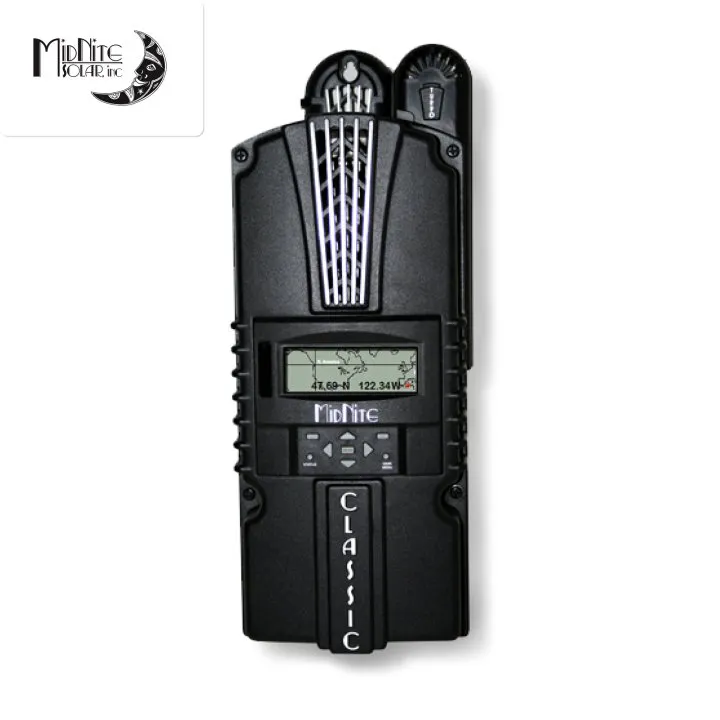
MidNite Solar Classic 150 MPPT
Key Features
- Max PV Input Voltage
- 150VDC (HyperVOC extends effective VOC to 198VDC at 48V battery)
- Max Output Current
- 96A at 12V, 94A at 24V, 86A at 48V, 65A at 72V
- Battery Voltage Range
- 12 to 72V nominal, regulation set points 10 to 100VDC
- Efficiency
- 98% power conversion across full battery voltage range
- Certifications
- ETL listed to UL1741 and CSA (US and Canada), CE, FCC Class B
- Communication
- Modbus over Ethernet and RS232, MyMidNite.com cloud monitoring
- Data Logging
- 380 days daily history plus 24 hours of 5-minute interval data
A high-current, multi-source MPPT controller built for off-grid homes running 24V, 48V, or 72V battery banks. Assembled in the USA, it pairs solar, wind, and hydro MPPT modes with HyperVOC voltage extension and built-in arc fault and ground fault protection, so installers don't need separate protection hardware.
Pros
- ✓Made in the USA with ETL/CSA certification and a 5-year warranty
- ✓Built-in DC ground fault and arc fault protection, no extra hardware needed
- ✓HyperVOC gives real headroom against cold-morning voltage spikes
- ✓One unit handles solar, wind, and hydro charging
- ✓380-day onboard data logging with free cloud monitoring
Cons
- ✗IP30 indoor rating only, needs the Drip Shield add-on for damp locations
- ✗No native Bluetooth, monitoring runs through Ethernet, RS232, or the optional graphical display
*Affiliate link — we may earn a commission at no extra cost to you.
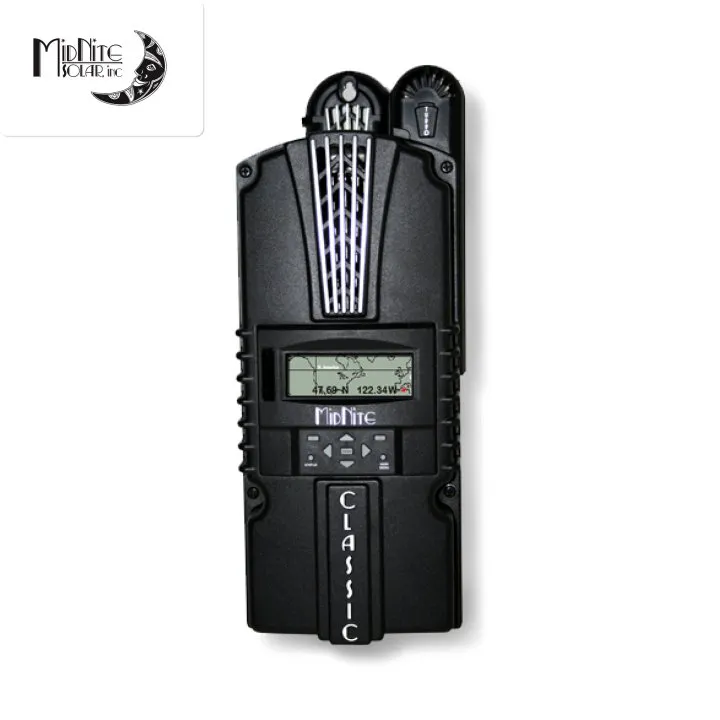
MidNite Solar Classic 200-SL MPPT Charge Controller
Key Features
- Max PV Input Voltage
- 200VDC (HyperVOC extends effective VOC to 248VDC at 48V battery)
- Max Output Current
- 79A at 12V, 78A at 24V, 55A at 48V, 43A at 72V
- Battery Voltage Range
- 12 to 72V nominal, regulation set points 10 to 100VDC
- Efficiency
- 98% power conversion across full battery voltage range
- Certifications
- ETL listed to UL1741 and CSA (US and Canada), CE, FCC Class B
- Communication
- Modbus over RS232, MNGP graphical display included standard
- Data Logging
- 380 days daily history plus 24 hours of 5-minute interval data
A solar-only version of the Classic 200, built for off-grid homes and remote cabins running 24V, 48V, or 72V battery banks. It keeps the full 200VDC input rating and HyperVOC voltage extension but trades the arc fault detector and Ethernet port for a simpler menu, faster setup, and a lower price. The graphical display ships standard rather than as an add-on.
Pros
- ✓Same 200VDC input and HyperVOC headroom as the standard Classic 200, at a lower price
- ✓MNGP graphical display included standard, not an upsell
- ✓Simplified menu speeds up commissioning on straightforward PV systems
- ✓Made in the USA with ETL/CSA certification and a 5-year warranty
- ✓Stacks with other Classic SL, Standard, and Lite units for parallel operation
Cons
- ✗No arc fault detection, unlike the full Classic 200 and Classic 150
- ✗No Ethernet port, communication is RS232 only
- ✗Solar-only, no wind or hydro MPPT modes
*Affiliate link — we may earn a commission at no extra cost to you.
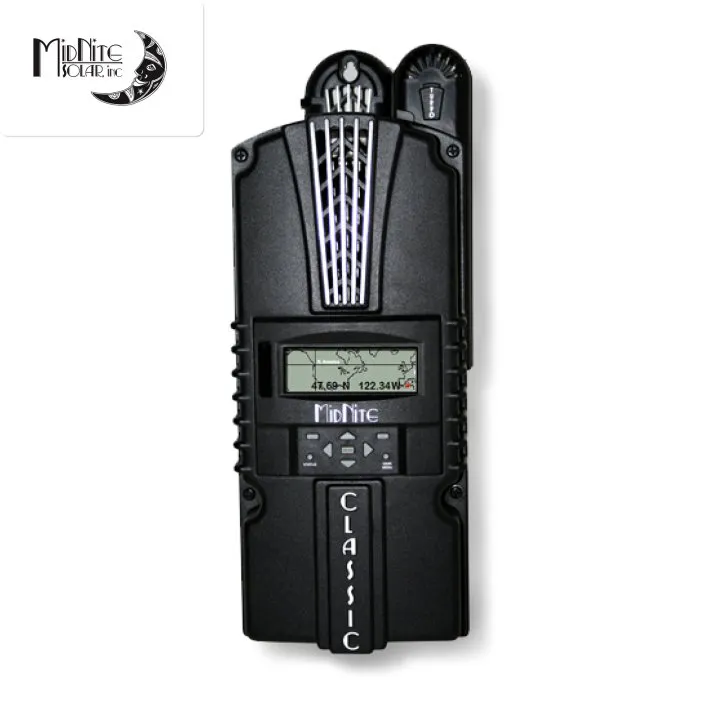
MidNite Solar Classic 150-SL
Key Features
- Max PV Input Voltage
- 150VDC (HyperVOC extends effective VOC to 198VDC at 48V battery)
- Max Output Current
- 96A at 12V, 94A at 24V, 86A at 48V, 65A at 72V
- Battery Voltage Range
- 12 to 72V nominal, regulation set points 10 to 100VDC
- Efficiency
- 98% power conversion across full battery voltage range
- Certifications
- ETL listed to UL1741 and CSA (US and Canada), CE, FCC Class B
- Communication
- Modbus over RS232, MNGP graphical display included standard
- Data Logging
- 380 days daily history plus 24 hours of 5-minute interval data
A solar-only version of the Classic 150, built for off-grid homes and remote cabins running 24V, 48V, or 72V battery banks. It keeps the full 150VDC input rating and HyperVOC voltage extension but trades the arc fault detector and Ethernet port for a simpler menu, faster setup, and a lower price. The graphical display ships standard rather than as an add-on.
Pros
- ✓Same 96A output and HyperVOC headroom as the standard Classic 150, at a lower price
- ✓MNGP graphical display included standard, not an upsell
- ✓Simplified menu speeds up commissioning on straightforward PV systems
- ✓Stacks with other Classic SL, Standard, and Lite units for parallel operation
Cons
- ✗No arc fault detection, unlike the full Classic 150 and Classic 200
- ✗No Ethernet port, communication is RS232 only
- ✗Lower PV voltage ceiling (150VDC) limits string length compared to the 200 or 250 models
*Affiliate link — we may earn a commission at no extra cost to you.
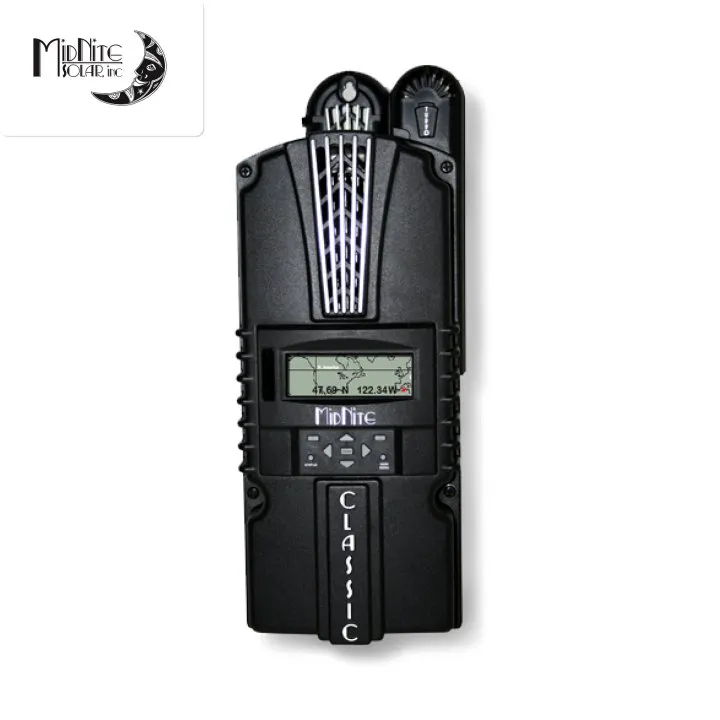
MidNite Solar Classic 250-SL
Key Features
- Max PV Input Voltage
- 250VDC (HyperVOC extends effective VOC to 298VDC at 48V battery)
- Max Output Current
- 61A at 12V, 62A at 24V, 55A at 48V, 43A at 72V
- Battery Voltage Range
- 12 to 72V nominal, regulation set points 10 to 100VDC
- Efficiency
- 98% power conversion across full battery voltage range
- Certifications
- ETL listed to UL1741 and CSA (US and Canada), CE, FCC Class
- Communication
- Modbus over RS232, MNGP graphical display included standard
- Data Logging
- 380 days daily history plus 24 hours of 5-minute interval data
The highest-voltage model in the Classic SL line, built for off-grid homes and remote cabins with long string runs or high-VOC panels that exceed what a 150V or 200V controller can handle. It keeps HyperVOC voltage extension and full solar MPPT tracking but trades the arc fault detector and Ethernet port for a simpler menu, faster setup, and a lower price than the standard Classic 250.
Pros
- ✓Highest PV voltage ceiling (250VDC) in the SL lineup, supports longer strings and high-VOC modules
- ✓HyperVOC extends effective input headroom to 298VDC at a 48V battery
- ✓MNGP graphical display included standard, not an upsell
- ✓Stacks with other Classic SL, Standard, and Lite units for parallel operation
- ✓Made in the USA with ETL/CSA certification and a 5-year warranty
Cons
- ✗Lowest output current in the Classic SL family (61 to 62A), less headroom for high-current single-string setups
- ✗No arc fault detection, unlike the full Classic 250
- ✗No Ethernet port, communication is RS232 only
*Affiliate link — we may earn a commission at no extra cost to you.
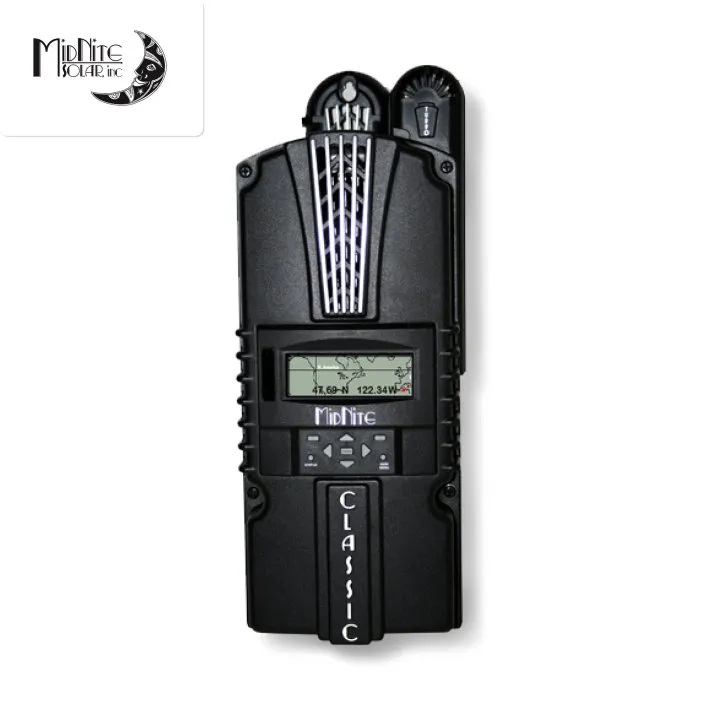
MidNite Solar Classic 200
Key Features
- Max PV Input Voltage
- 200VDC (HyperVOC extends effective VOC to 248VDC at 48V battery)
- Max Output Current
- 79A at 12V, 78A at 24V, 55A at 48V, 43A at 72V
- Battery Voltage Range
- 12 to 72V nominal, regulation set points 10 to 100VDC
- Efficiency
- 98% power conversion across full battery voltage range
- Certifications
- ETL listed to UL1741 and CSA (US and Canada), CE, FCC Class B
- Communication
- Modbus over Ethernet and RS232, MyMidNite.com cloud monitoring
- Data Logging
- 380 days daily history plus 24 hours of 5-minute interval data
A high-current, multi-source MPPT controller for off-grid homes running 24V, 48V, or 72V battery banks. The 200VDC input rating allows longer string runs than the Classic 150, while keeping the same solar, wind, and hydro MPPT modes, HyperVOC voltage extension, and built-in arc fault and ground fault protection.
Pros
- ✓Made in the USA with ETL/CSA certification and a 5-year warranty
- ✓Built-in DC ground fault and arc fault protection, no extra hardware needed
- ✓Higher 200VDC input ceiling allows longer strings than the Classic 150
- ✓One unit handles solar, wind, and hydro charging
Cons
- ✗IP30 indoor rating only, needs the Drip Shield add-on for damp locations
- ✗No native Bluetooth, monitoring runs through Ethernet, RS232, or the optional graphical display
*Affiliate link — we may earn a commission at no extra cost to you.
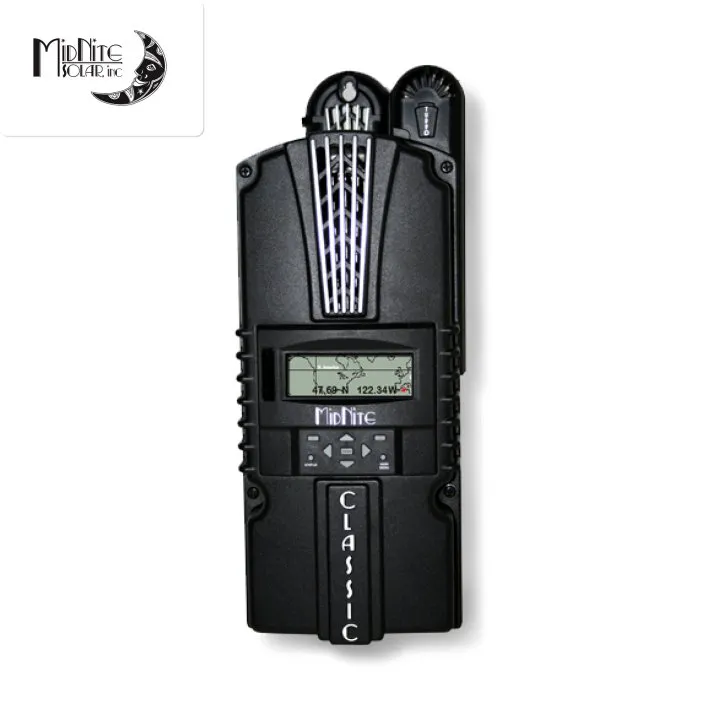
MidNite Solar Classic 250
Key Features
- Max PV Input Voltage
- 250VDC (HyperVOC extends effective VOC to 298VDC at 48V battery)
- Max Output Current
- 61A at 12V, 62A at 24V, 55A at 48V, 43A at 72V
- Battery Voltage Range
- 12 to 72V nominal, regulation set points 10 to 100VDC
- Efficiency
- 98% power conversion across full battery voltage range
- Certifications
- ETL listed to UL1741 and CSA (US and Canada), CE, FCC Class B
- Communication
- Modbus over Ethernet and RS232, MyMidNite.com cloud monitoring
- Data Logging
- 380 days daily history plus 24 hours of 5-minute interval data
The highest-voltage model in the full Classic line, built for off-grid homes with long string runs or high-VOC modules that exceed what a 150V or 200V controller can handle. It keeps the full solar, wind, and hydro MPPT modes, HyperVOC voltage extension, and built-in arc fault and ground fault protection found across the standard Classic series.
Pros
- ✓Highest PV voltage ceiling (250VDC) in the entire Classic lineup
- ✓Supports the longest strings and highest-VOC modules
- ✓Built-in DC ground fault and arc fault protection
- ✓One unit handles solar, wind, and hydro charging
Cons
- ✗Lowest output current in the standard Classic family (61 to 62A), less headroom for high-current single-string setups
- ✗IP30 indoor rating only
*Affiliate link — we may earn a commission at no extra cost to you.
How MPPT Charge Controllers Work
At the core of every MPPT solar charge controller is an algorithm that samples the voltage and current coming from your solar array many times per second, then adjusts internal buck or buck-boost circuitry to convert that variable panel voltage into the correct charging voltage for your battery voltage. This constant adjustment is what allows the controller to track the maximum power point as sunlight, temperature, and shading change throughout the day.
Efficiency gains from MPPT are largest when there's a big voltage difference between your solar array and your battery bank, such as when panels in series produce 60 volts feeding a 12v or 24v battery system. Real-world performance is also shaped by temperature (cooler panels produce higher voltage), irradiance levels, and mismatch between panels wired into the same string.
Key Features to Evaluate When Choosing an MPPT Charge Controller
Rated current and voltage
Every MPPT controller has a maximum continuous current rating (commonly 30a, 60a, or 100a) and a maximum PV open-circuit voltage. Both need to match your array size and system voltage with room to spare.
Battery chemistry support
A good solar charge controller should support lead-acid, AGM, GEL, and lithium batteries, including lifepo4 batteries, with adjustable charging stages for bulk, absorption, and float.
Efficiency and tracking speed
Look at real-world conversion efficiency, not just the marketing number, and how quickly the MPPT algorithm reacts to changing solar input.
Protection features
Reverse polarity, overcurrent, and short-circuit protection are non-negotiable, especially for RV and off-grid installations where unattended operation is common.
Monitoring and communication
Bluetooth, RS485, or app-based monitoring make it far easier to track battery voltage, array output, and system health without climbing into a battery compartment. Brands like Victron, EPEVER, Renogy, and Outback each take a different approach here, and Victron's SmartSolar line in particular is known for its Bluetooth-based VictronConnect app.
Build quality and warranty
Form factor, IP rating for outdoor use, and warranty length are worth comparing since a charge controller often outlives several battery replacement cycles.

Types and Use Cases
Small 12v and 24v MPPT units are common in RVs, boats, and cabins with a handful of panels. Medium 48v systems are typical for off-grid homes and backup power setups feeding a larger battery bank.
High-power, high-current units are built for commercial arrays or large off-grid solar power systems, and some installations use multiple smaller controllers in parallel rather than one large unit, particularly when an array has mixed orientations or partial shading.
How to Size an MPPT Charge Controller
Sizing starts with calculating the maximum current your solar array can produce at your chosen system voltage. Take the short-circuit current of your panels, multiply by the number of parallel strings, and add a safety margin of around 25 percent to account for temperature and irradiance spikes.
Then confirm the controller's maximum PV voltage rating comfortably exceeds your array's open-circuit voltage in cold weather, when voltage runs highest.
For a 12v system with a modest array, a 30a or 60a MPPT controller is usually sufficient. Larger 24v and 48v off-grid systems often call for 60a to 100a units, or multiple controllers if the array is split across different roof angles.
Installation and Best Practices
Before installation, map out panel layout, wiring runs, and fusing requirements. Use appropriately rated wiring, DC fuses or breakers between the array and controller, and between the controller and battery bank, and always include a way to disconnect the system for maintenance.
Grounding and surge protection matter more than many DIY solar builders expect, particularly in areas prone to lightning. Mount the controller in a ventilated, weather-protected location, since heat buildup reduces both efficiency and lifespan. During commissioning, update firmware if available and confirm the controller has correctly detected your battery chemistry before leaving the system unattended.
Costs, Value, and Warranty Considerations
Prices for MPPT charge controllers range from budget units under $100 to advanced 100a controllers from brands like Victron or Outback costing several hundred dollars. When comparing price, factor in efficiency, protection features, and warranty length rather than upfront cost alone, since a cheaper controller that underperforms or fails early often costs more over the life of the system. Buy from authorized dealers or established retailers to make sure warranty claims are honored.
Real-World Performance
Off-grid cabin owners commonly report noticeably better winter performance after switching from PWM to MPPT, since cold weather pushes panel voltage higher and MPPT captures that extra headroom. RV owners upgrading to an MPPT solar charge controller often see faster battery bank recovery on partly cloudy days, when a PWM controller would otherwise struggle to keep up.
Conclusion: Picking the Best MPPT Charge Controller for Your Needs
The right MPPT controller comes down to matching current and voltage ratings to your array, choosing solid battery chemistry and protection support, and picking a brand with dependable monitoring and warranty backing.
For small RV and boat setups, a compact 30a to 60a unit is usually enough. Off-grid homes typically need a 48v-capable 60a to 100a controller, and larger arrays may call for multiple
FAQ
- What is the main advantage of an MPPT charge controller over a PWM controller?
- MPPT converts higher panel voltage down to battery voltage while maximizing power extraction, typically yielding 10 to 30 percent more energy harvest than PWM under many conditions.
- How do I know what amperage MPPT controller I need?
- Calculate the maximum array current at your system voltage, add a safety margin, and choose a controller with a higher continuous current rating than that number.
- Can MPPT controllers work with lithium batteries?
- Yes. Many MPPT controllers support lithium chemistries, including lifepo4, but confirm the unit has configurable charge profiles suited to your battery type.
- Do MPPT controllers need regular maintenance?
- Maintenance is minimal. Keep vents clear, check wiring periodically, update firmware when available, and watch for corrosion or excess heat during operation.
- Is it better to use one large MPPT or multiple smaller MPPTs?
- Multiple controllers can help with shading or mismatched strings, while a single larger unit is simpler and often cheaper for a uniform array.