Enphase vs. SolarEdge: Which Inverter Should You Choose?
SolarEdge and Enphase are the two names you'll hit first in any inverter search, and here's the short answer: choose Enphase if your roof has partial shade, multiple angles, or you plan to expand your solar system later.
Choose SolarEdge if your roof is simple, unshaded, and you want a lower-cost inverter setup with a central inverter box instead of dozens of small units.
The rest of this guide breaks down why, so you can match the inverter brand to your actual roof instead of guessing.
Quick Comparison Snapshot: Enphase vs SolarEdge
| Feature | Enphase | SolarEdge |
|---|---|---|
| System type | Microinverters (panel-level) | Power optimizers + central inverter (string-level) |
| Converts | DC to AC at each panel | DC power to AC power at one central inverter |
| Best for | Shaded or multi-angle roofs | Simple, unshaded roofs |
| Warranty | 25-year warranty | 12-year warranty (extendable) |
| Monitoring | Panel-level via Enphase IQ app | String-level via SolarEdge portal |
SolarEdge vs Enphase: Pros and Cons
Enphase pros:
- Panel-level output
- Easy expansion
- No single point of failure.
Enphase cons:
- More individual solar panels to maintain
- Higher per-watt equipment cost.
SolarEdge pros:
- lower-cost inverter for large
- Uniform arrays
- Mature monitoring platform.
SolarEdge cons:
- Central inverter is a single point of failure
- Shorter warranty by default.
How Each Inverter Actually Works
Every solar panel produces direct current, and your home runs on alternating current. That conversion, DC to AC, is the whole job of an inverter. Enphase and SolarEdge just do it in very different places.
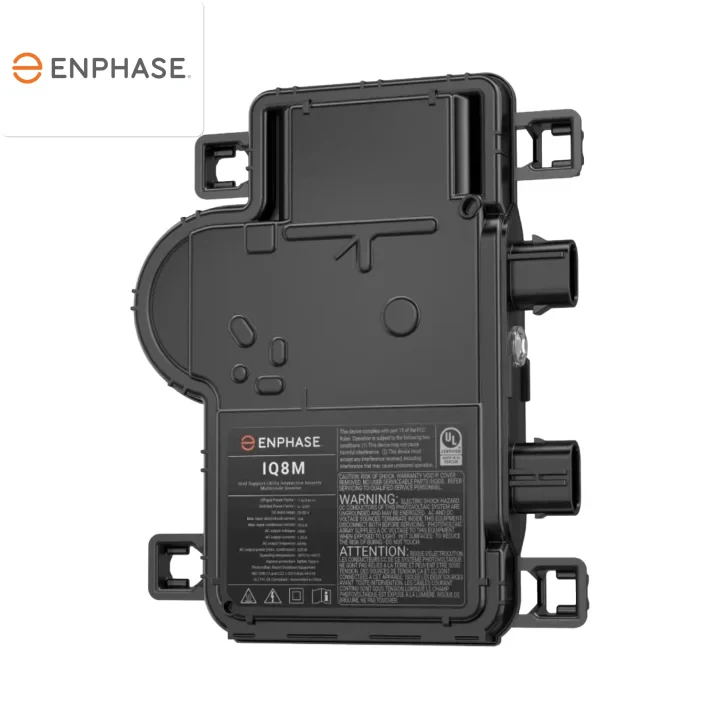
Enphase uses microinverters, small units bolted to the back of each solar panel. Each microinverter converts DC power to AC power right there, so every panel in the array works independently.
If one panel is shaded or fails, the rest keep producing at full output. A single Enphase Envoy combiner can handle monitoring for the whole system, feeding panel-level data back to the Enphase IQ app.
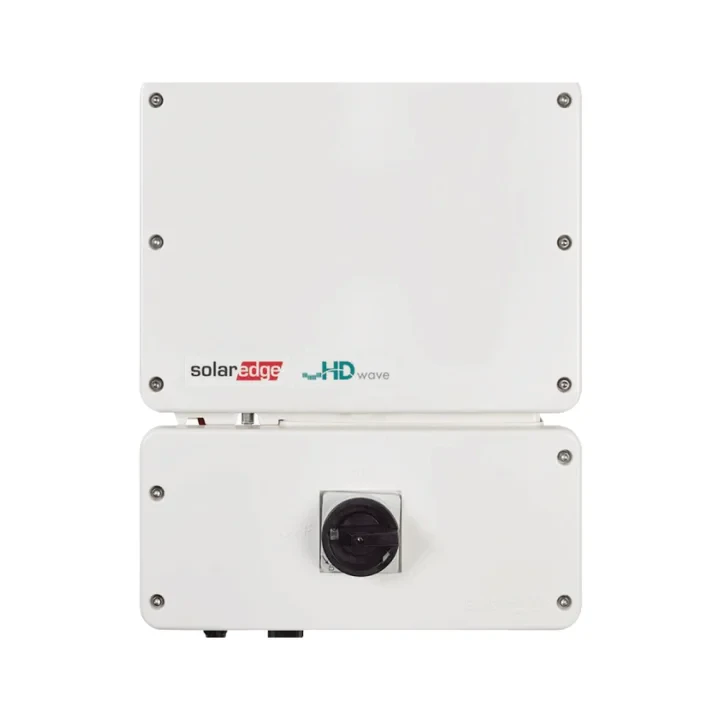
SolarEdge central inverter takes a different approach: power optimizers, one per panel, condition the DC output and pass it down a string to a central inverter, where the actual DC-to-AC conversion happens. Power electronics inside each optimizer handle maximum power point tracking for that individual panel, so you still get panel-level protection against shade, just not panel-level conversion. The AC output comes from one central inverter, not dozens of small ones.
This is the core difference between module-level power electronics done two ways: Enphase converts at the panel, SolarEdge optimizes at the panel and converts centrally.
Performance and Shade
If your roof has any shade at all, whether from a chimney, a tree, or a neighboring roofline, this section matters most. In a traditional string inverter setup, one shaded panel can drag down the output of the whole string. Both Enphase and SolarEdge solve this problem, just differently.
Enphase microinverter avoids the issue entirely: since each panel converts its own power independently, one shaded panel affects only itself. The rest of the array keeps running at full capacity regardless of what one panel is doing.
SolarEdge's power optimizers isolate the underperforming panel's DC output before it reaches the central inverter, which recovers most of the lost production, though not always all of it, since the string still shares a single conversion point downstream.
For a roof with multiple orientations, east and west-facing sections, or partial shade that moves through the day, Enphase tends to edge out SolarEdge on real-world solar production.
Installers who work with both brands will often point to system efficiency data showing a small but consistent gap in mixed-shade conditions. For a clean, south-facing roof with no shade and one consistent angle, the difference between the two narrows to almost nothing, and the decision comes down to cost instead of performance.
Temperature also plays a role, though a smaller one. Both microinverters and power optimizers derate slightly in high heat, since power electronics lose some efficiency as temperatures climb. Enphase's smaller, distributed components tend to run cooler individually than a single central inverter working through peak summer afternoons, though the difference rarely swings a buying decision on its own.
Monitoring and Smart Features
Enphase's app shows per-panel data, so you can spot an underperforming solar panel in the array immediately rather than waiting for a noticeable drop in whole-system output. SolarEdge's portal reports at the string or system level by default, with optional panel-level add-ons available for an extra cost. Both platforms flag faults and send alerts to your installer automatically, which shortens the time between a problem occurring and a technician showing up.
Both brands integrate with home batteries and, increasingly, EV charging, though Enphase's ecosystem leans harder into whole-home energy management, coordinating solar production, battery storage, and backup power from a single app.
SolarEdge's integrations tend to focus more narrowly on storage and monitoring rather than a full home energy platform, which may matter less if all you want is reliable solar power without the extra smart-home layer.
Storage and Backup
Enphase batteries are AC-coupled, meaning they connect after the DC-to-AC conversion has already happened, which keeps installation modular and lets you add storage to an existing system without rewiring the array.
SolarEdge offers a DC-coupled option through its SolarEdge Home Hub inverter, which can be more efficient in some setups since it avoids converting power twice, once at the panel and again at the battery.
If backup power during an outage is a priority, ask your installer how each brand handles whole-home versus partial-load backup, since this varies by product line and by state. Rapid shutdown requirements, a safety standard most jurisdictions now enforce for grid-tied rooftop solar systems, are built into both platforms by default, so this shouldn't factor into your brand decision either way.
Cost, Warranty, and Installer Availability
SolarEdge is typically less expensive than Enphase on equipment cost, largely because one central inverter costs less than dozens of microinverters. Installation labor can go either way depending on your installer's experience with each brand.
Warranty length is one of the clearest differences. Enphase inverters commonly ship with a 25-year warranty on the microinverters themselves. SolarEdge's central inverter typically carries a 12-year warranty, extendable to 20 or 25 years for an added cost. If you're planning to own the home long-term, factor that into your total cost of ownership, not just the upfront price.
Availability matters too. Ask your solar installer which brand they install most, since a solar installer with deep Enphase or SolarEdge experience will troubleshoot faster and warranty claims will move smoother.
Both companies rank among the largest names in the global inverter market, so parts and support aren't a concern with either choice, it's really a question of which one your local installer knows best.
The number of solar panels in your system also affects which inverter setup makes more financial sense. A small array with only a handful of panels won't see much cost difference either way, but as the size of your solar system grows into double digits, the per-unit cost of microinverters adds up faster than a single central inverter box, which is part of why SolarEdge tends to win on price for larger, simpler installations.
How to Choose
Ask yourself three questions before you decide:
- Does your roof have shade, multiple angles, or a complex layout? Choose Enphase.
- Is your roof simple, unshaded, and single-facing? Either works, so let cost decide, and that usually means SolarEdge.
- Do you plan to expand your solar system later? Enphase's per-panel design makes adding panels simpler than resizing a SolarEdge string.
There's no universal best inverter, only the better fit for your roof, your budget, and your plans for the system.
Conclusion
The comparison of SolarEdge and Enphase comes down to where the conversion happens: at every panel with Enphase, or centrally with SolarEdge. Shaded and complex roofs favor Enphase.
Simple, unshaded roofs let SolarEdge's lower-cost inverter shine. Whichever you're leaning toward, run your roof through a solar calculator and get quotes from an installer who works with both, so the recommendation is based on your numbers, not just brand loyalty.
FAQ
- Which is better: Enphase or SolarEdge?
- Neither is universally better. Enphase suits shaded or complex roofs; SolarEdge suits simple, unshaded roofs at a lower inverter cost.
- Is Enphase more reliable than SolarEdge?
- Enphase's per-panel design means no single point of failure. SolarEdge's central inverter is a single component, so if it fails, the whole system stops producing until it's replaced.
- Can I add battery storage to either system?
- Yes. Enphase batteries are AC-coupled; SolarEdge offers a DC-coupled option through its Home Hub inverter.
- Which produces more energy on a shaded roof?
- Enphase typically holds up better under partial shade since each panel converts independently, though SolarEdge's optimizers close most of the gap.
- How do warranties compare?
- Enphase commonly offers a 25-year warranty on microinverters. SolarEdge's inverter warranty is typically 12 years, extendable to 20 or 25 years.