Ranch vs Two Story House Plans: Which Design Is Right for Your Family?

Choosing the right house plan can feel overwhelming, especially when deciding between ranch and two-story designs. The pain? Balancing budget, space, accessibility, and future needs without making costly mistakes.
Many homeowners struggle with questions like: Will stairs be a problem? How much land do I really need? Can I afford the long-term maintenance? This uncertainty can stall your entire building project. The solution?
This article breaks down the key differences between ranch and two-story house plans, offering strategic guidance and tactical tips to help you make an informed decision that fits your family’s lifestyle and budget. Read on to discover which design suits your needs best and how to avoid common pitfalls.
Ranch vs Two Story House Plans: Key Differences
The main difference comes down to horizontal vs vertical living space distribution.
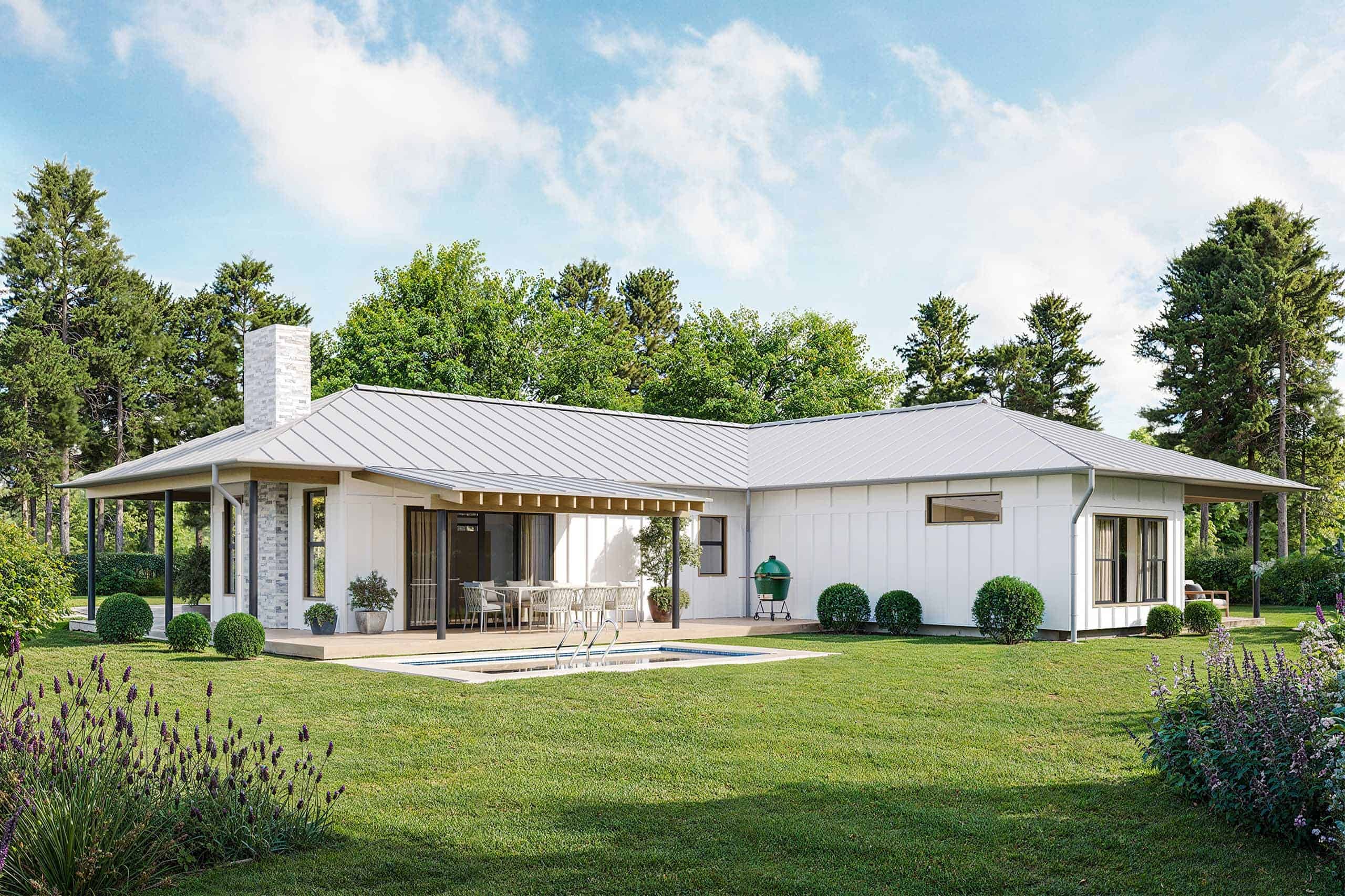
- Ranch house plans focus on single level living, placing all rooms-bedrooms, kitchen, laundry room, primary suite-on the same floor. This ranch style house features a low-profile roof, wide horizontal layout and seamless flow between indoor and outdoor spaces.
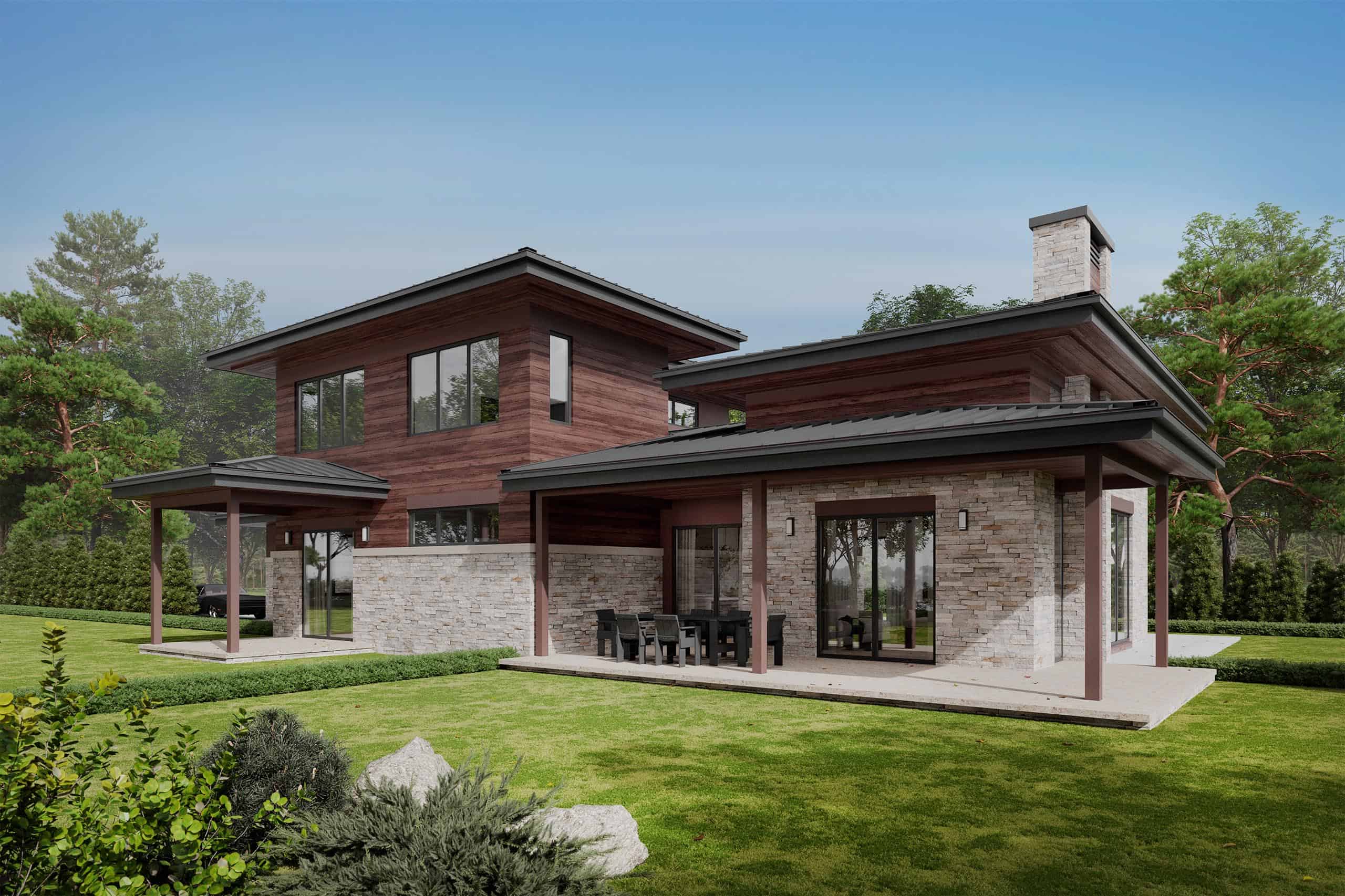
- Two story house plans rely on vertical space efficiency, stacking a second floor above the ground floor. Public areas like the kitchen and living room occupy the first floor, while bedrooms upstairs provide natural room separation.
Both approaches can create functional family homes, but the living experience differs significantly in terms of daily convenience, construction budget, energy efficiency and long-term usability.
Construction Costs and Budget Impact
Cost is one of the most important factors when choosing between floor plans, and the differences between these two home styles are substantial.
Ranch House Plan Costs
Ranch homes cost $150-$200 per square foot to build in 2026, varying by location and finishes. In higher-cost regions like Central PA, ranch homes typically cost $220-$300 per square foot. The larger footprint of a single story layout means more foundation to pour and more roofing material to install-two of the most expensive structural components in any build.
Single-level construction does eliminate some expenses like staircases and multi-level structural supports. However, labor costs associated with longer plumbing runs, extended electrical wiring and greater exterior wall perimeter often offset those savings. A ranch style home also requires more siding, more insulation and more exterior finishing per square foot of living space.
For a concrete example: in Iowa, a 2,400 square foot ranch custom home cost approximately $420,000 to build. The cost breakdown revealed higher foundation and roof expenses compared to a comparable two story design of the same square footage.
Two Story House Plan Costs
Two story homes cost $130-$180 per square foot, offering 10-20% savings per square foot over ranch plans. Two-story homes can save 10-20% on construction costs overall when targeting the same living space. The savings come primarily from shared foundation and roof systems serving two levels-a 2,500 square foot two story home only needs roughly 1,250 square feet of foundation and roofing, using far less roofing material than the ranch equivalent.
Additional expenses include staircase construction, reinforced structural framing for upper floors, and potentially more complex HVAC ducting that crosses between levels. Multi-zone heating and cooling systems are often necessary since two-story homes can have uneven temperatures due to their design.
Still, for homeowners seeking more square footage within a fixed construction budget, the two story design consistently delivers more living space per dollar spent. Using a square footage calculator during the planning phase helps you understand exactly how much space each design provides relative to cost.
Lot Size Requirements and Land Use
How different house plans use land directly impacts total project costs-sometimes dramatically.
Ranch House Plan Land Needs
Ranch homes typically need 8,500-10,000 square feet of land for proper setbacks and outdoor space. Ranch homes require larger lots due to their wider footprint, demanding more land compared to vertical two story designs. You can use an acreage calculator to determine exactly how much land your preferred ranch plan requires.
The financial impact is significant. Land costs can add $15,000-$45,000 for ranch homes compared to two story options in suburban areas. Ranch homes generally cost more due to larger land requirements, and the sprawling design leaves less yard space for landscaping, pools or future additions.
For larger ranch plans-say a 3,500 square foot home-you may need 0.35-0.5 acres of land depending on local setback requirements, which becomes increasingly expensive in growing suburban markets.
Two Story House Plan Land Efficiency
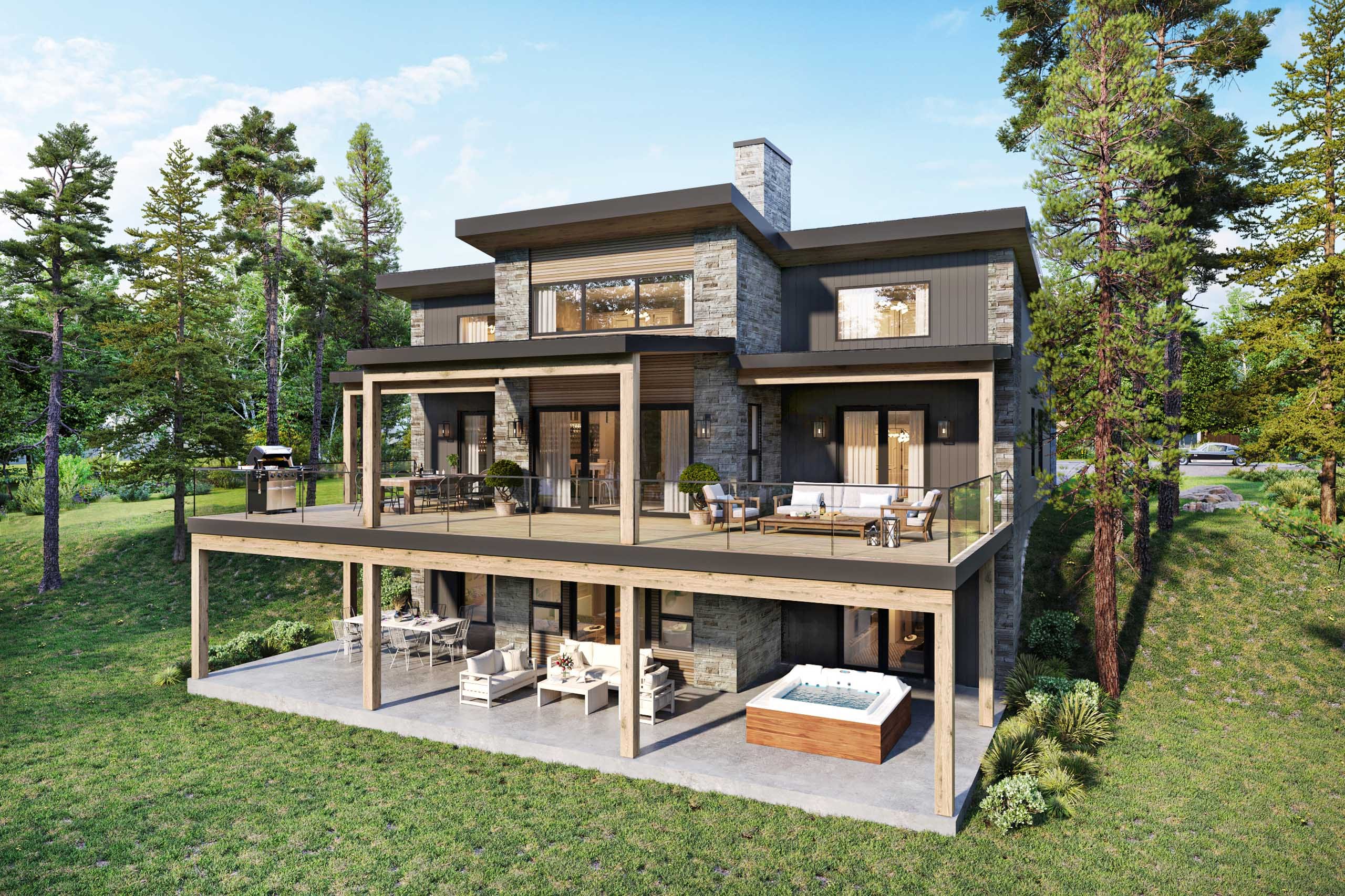
Two-story homes require only 5,500-7,000 square feet of land for the same square footage. A two-story home has a smaller base footprint suitable for smaller lots, which maximizes available yard space for outdoor living and recreation.
This compact footprint means more room for patios, gardens, play areas and potential expansions. In expensive urban and suburban markets, efficient land use reduces overall project costs substantially. Many local zoning codes also limit lot coverage percentages, and two story plans help homeowners stay within those limits while still maximizing indoor space.
Vertical design preserves landscaping opportunities and property value. On sloped sites, two story homes adapt better to elevation changes, whereas ranch homes may require extensive grading or retaining walls.
Family Lifestyle and Daily Living
Your house plan choice directly shapes daily routines and family dynamics for years to come.
Ranch House Plan Living Experience
Ranch homes eliminate stairs, enhancing accessibility for families of all ages. Families with young children often prefer ranch homes for supervision-parents can maintain line of sight across the entire home from common areas. Ranch homes are safer for young children and elderly family members, making them a strong choice for young families and those planning a forever home.
Ranch homes often foster family togetherness with open floor plans that create seamless flow between indoor and outdoor living spaces. Sliding glass doors and patio access from multiple rooms strengthen the connection between indoor and outdoor spaces. All the bedrooms, the laundry room, guest suites and primary suite sit on the same floor, eliminating the daily inconvenience of navigating stairs.
On the flip side, limited privacy between bedrooms is a real concern since sound travels easily across a single level. Long hallways can mean surprisingly long walking distances inside the home, and the larger exterior wall area relative to floor space increases exposure to heat gain and loss.
Two Story House Plan Living Experience
Two-story homes provide better privacy by separating bedrooms from living areas. With bedrooms upstairs and public spaces on the ground floor, two story homes naturally create quieter sleeping areas-particularly useful for shift workers, older children who need study space, or multi-generational households. Second story windows and bedroom windows on the upper floors offer enhanced views, street privacy and a sense of security.
However, stairs create daily exercise but pose safety concerns for young kids and elderly residents. Carrying laundry, groceries and everyday items between floors adds friction to daily routines. Two story homes tend to present more challenges for accessibility as residents age.
Heat rises, making upper floors of two-story homes warmer. This temperature stratification often demands multi-zone HVAC systems, and noise can transfer between floors despite sound-dampening construction methods. Strategic placement of a master bedroom or primary suite on the first floor can mitigate some accessibility concerns while preserving the privacy benefits of the second floor.
Long-Term Maintenance and Accessibility
Maintenance requirements accumulate over decades, and the differences between these designs become more pronounced with time.
Ranch House Plan Maintenance
Ranch homes generally have lower maintenance costs due to single-level access. Roof repairs, gutter cleaning, window washing and exterior painting are all manageable from standard ladders without professional equipment. A roof shingle calculator can help you estimate replacement costs, keeping in mind that ranch homes require more roofing material due to their larger roof area.
Single-level design simplifies cleaning, decorating and home improvement projects. Ground-level access reduces the need for professional services for routine maintenance. Universal design features-wide hallways, step-free entrances, barrier-free showers-integrate more naturally into a single story layout. About 10% of U.S. homes currently qualify as "aging ready" with step-free entry and a main floor bedroom and bathroom, giving ranch homes a natural advantage for long term plans.
However, larger roof and foundation areas do increase material replacement costs over time. More exterior wall surface requires more paint, more siding replacement and more insulation upkeep.
Two Story House Plan Maintenance
Second story exterior maintenance requires professional services or specialized equipment for window cleaning, siding repairs and gutter work. This adds recurring expense that ranch homeowners avoid.
The compact foundation and roofing offset these costs somewhat-less roofing material means lower replacement expenses when the time comes. You can estimate framing and structural needs with a framing calculator to plan future repairs.
Upper floor heating and cooling systems may need more frequent service due to temperature variations. Two-story homes can incur $150 to $400 more in annual utility costs due to the complexity of maintaining even temperatures across multiple levels. Staircase maintenance and safety inspections become ongoing considerations, and retrofitting a two story home with an elevator or chair lift is expensive-often $15,000-$30,000 or more.
Regional and Climate Considerations
Climate, regional factors and local building codes often determine which home style performs better in practice.
- Cold climates: Two-story homes are 5-15% more energy-efficient overall, retaining heat more effectively due to less exterior wall surface relative to floor area. Ranch homes may use more energy for heating and cooling, and their larger perimeter increases heating costs.
- Hot, humid climates: Ranch homes benefit from cross-ventilation and lower ceiling heights. Deep eaves, porches and strategic window placement help manage heat gain. Two story plans may have higher cooling needs on upper floors where heat rises.
- Flat, rural terrain: Ranch style homes thrive on spacious, affordable lots. In the Sunbelt and Southeast, where land is cheaper and terrain is flat, ranch homes remain the dominant home style.
- Urban and suburban density: Two story house plans are more practical where lots are narrow and expensive. In the Northeast and densely developed suburbs, vertical designs maximize extra space within tight lot coverage limits.
Regional preferences also affect resale value and neighborhood compatibility. Ranch homes often sell for about 10% more than two-story homes in markets where single story inventory is scarce. Ranch homes command a higher price-per-square-foot in aging markets, and ranch homes have seen a price increase of over 40% in five years.
Conversely, in family-heavy neighborhoods, two-story homes often sell faster. Two-story homes are ideal for maximizing resale value in suburban markets where families with young kids are the primary buyers.
Understanding local market trends is essential before selecting house plans. Building regulations may favor one design type over another based on lot coverage rules, height restrictions and setback requirements.
Ranch vs Two Story House Plans: Which Should You Choose?
Choose ranch house plans if you prioritize single level living, aging in place features and easier maintenance. Ranch homes require larger HVAC systems for consistent temperature control but deliver unmatched accessibility and convenience. They're the stronger choice when land is abundant, your lot is flat, and your long term plans include staying in the home through retirement. Ranch homes also deliver better energy efficiency on a day-to-day basis when properly insulated and designed for their climate.
Choose two story house plans if you need maximum square footage on smaller lots and want natural privacy separation between living and sleeping areas. Two story homes typically cost 10-20% less per square foot to build, making them the more budget-friendly path to more living space. They work best in suburban and urban settings where land costs are high and lot widths are limited.
Consider hybrid options like 1.5 story designs that combine main floor living with optional bonus rooms or a bonus room above the garage. A two story home with a primary suite on the first floor offers the privacy of a second floor for children's bedrooms while keeping the master bedroom accessible as residents age.
Both ranch and two story designs can create beautiful, functional family homes when matched with appropriate lots and budgets. Truoba offers extensive collections of both ranch and two story house plans that buyers can purchase and customize for their specific needs.
Whether you're looking for a compact single story home or a spacious 2 story design with guest suites and a dedicated laundry room on the main floor. Their stock plans include modification options to tailor initial construction to your family's exact requirements and future plans.