Top 5 American Solar Panel Manufacturers in 2026
Not every solar panel sold in the U.S.A is actually built here, and that gap matters more than most buyers realize. A panel manufactured or assembled on American soil can mean faster warranty support, a shorter supply chain, and eligibility for domestic content tax credits that imported panels simply don't qualify for.
This guide breaks down the top 5 American solar panel manufacturers of 2025, what makes each one worth considering, and where you can actually buy their panels.
Side-by-Side Comparison
| Manufacturer | Wattage | Cell Type | Power Warranty | U.S. Presence |
|---|---|---|---|---|
| Canadian Solar | 450W to 715W | Mono silicon, TOPCon, bifacial | 25 years | Assembled-in-USA lines |
| Waaree USA | 540W to 585W | N-type bifacial | 30 years | Brookshire, TX assembly |
| Astronergy | 530W to 650W | N-type TOPCon bifacial | 30 years | Domestic content lines |
| QCELLS | 400W to 485W | Q.ANTUM PERC | 25 years | Dalton, GA manufacturing |
| Mission Solar | 375W to 435W | Mono PERC/TOPCon | 25 years | 100% San Antonio, TX built |
Why American Solar Manufacturing Matters
Solar manufacturing built or assembled in the U.S. gives homeowners and installers a few concrete advantages: shorter shipping times, easier warranty claims, and stronger protection against the supply chain disruptions that hit imported panels during tariff disputes.
It also unlocks a domestic content bonus under Section 48E, the commercial investment tax credit that survived the 2025 rollback, adding extra value for third-party-owned systems that use a qualifying share of U.S.-made components.
The list below focuses on manufacturers with real production, assembly, or corporate roots in the U.S., not just a sales office. Selection was based on manufacturing footprint, warranty strength, financial stability, and how consistently each brand shows up in independent testing from labs like PVEL and rankings like Bloomberg's Tier 1 list.
How We Selected These Manufacturers
Each company here was evaluated on active U.S. manufacturing capacity, cell and module technology, warranty strength, and financial backing. We looked at gigawatt (GW) output, not just announced plans, and prioritized manufacturers producing panels on American soil today rather than assembling from imported components.
Astronergy, a major global manufacturer under China's Chint Group, didn't make the cut. It still runs its factories in China, Thailand, and Turkey and is only exploring a U.S. plant. First Solar takes that fifth spot instead, as one of the very few companies making solar cells and modules from the ground up domestically.
The U.S. Solar Manufacturing Map in 2026
Domestic solar manufacturing capacity kept climbing through 2025 and into 2026, but the policy landscape underneath it shifted hard. The Inflation Reduction Act's manufacturing incentives (the 45X production tax credit) are still driving factory investment, but the "One Big Beautiful Bill Act," signed in July 2025, ended the 30 percent residential 25D tax credit for good as of December 31, 2025.
Homeowners installing solar in 2026 no longer get that federal credit, though the commercial 48E investment tax credit still applies to third-party-owned systems (leases and PPAs) through 2027, now with tighter sourcing rules around foreign-linked components.
That policy whiplash hasn't slowed factory construction. U.S. solar module manufacturing capacity has surpassed 69 GW, nearly nine times what it was before manufacturing tax credits took effect, and now exceeds the roughly 43 GW of solar the country installed in 2025.
First Solar remains the biggest name in fully domestic production, running cadmium telluride (CdTe) thin-film lines out of its manufacturing facilities in Ohio and newer plants in Alabama and Louisiana, an alternative to the silicon panels most other brands sell.
Illuminate USA, a joint venture between LONGi Solar and Invenergy, runs a 5 GW silicon panel plant in Pataskala, Ohio. Silfab Solar operates a module line in Burlington, Washington, and is bringing a new solar cell and module facility online in Fort Mill, South Carolina. Trina Solar's former Wilmer, Texas plant, meanwhile, now belongs to T1 Energy, which acquired the 5 GW facility from Trina in late 2024 and continues producing there.
The real bottleneck isn't modules anymore, it's what feeds them. Domestic solar cell manufacturing capacity sits at just 3 GW, meaning the vast majority of U.S.-assembled panels still rely on imported cells and wafers. Module factories alone aren't nearly enough solar manufacturing to close that gap; until cell and wafer capacity catches up, full domestic content remains the exception rather than the rule.
Top American Solar Panel Manufacturers
1. Canadian Solar
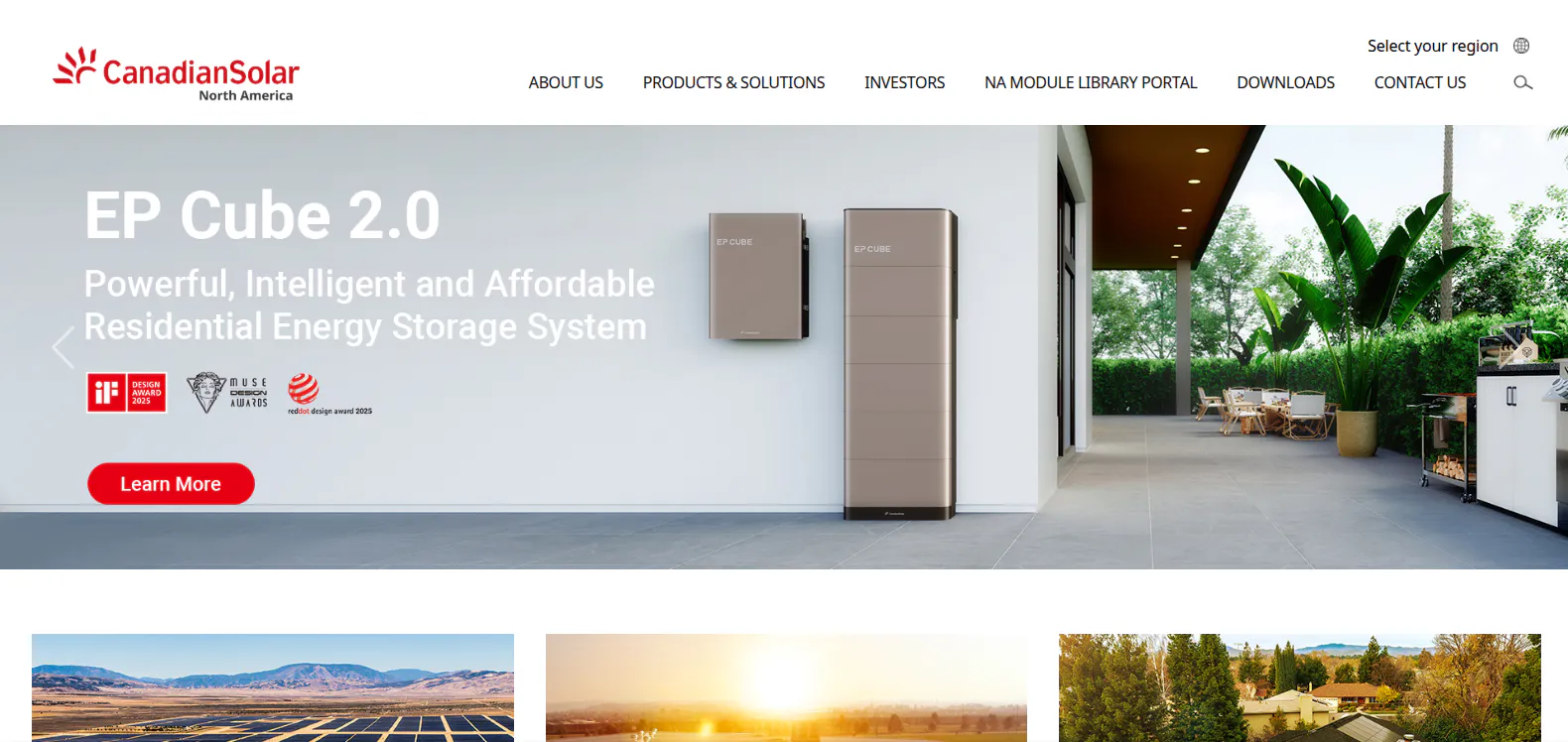
Despite the name, Canadian Solar is headquartered in Canada with global manufacturing operations, including facilities in China, Vietnam, Indonesia, and Brazil, plus a growing line of panels assembled in the USA for the domestic market. It's the world's 4th largest solar panel manufacturer, with more than 20 years in the industry and Tier 1 status across 150+ countries.
Key specs: Canadian Solar's HiKu6 and TOPHiKu6 series use monocrystalline silicon cells with bifacial and TOPCon options, reaching around 21.3% efficiency on residential models and up to 715W on commercial modules.
Warranty: 12 to 25 year product warranty depending on the model, with a performance warranty guaranteeing at least 84.8% output after 25 years.
Best for: Homeowners and installers who want a well-established Tier 1 brand with a wide range of wattages and price points.
2. Waaree USA
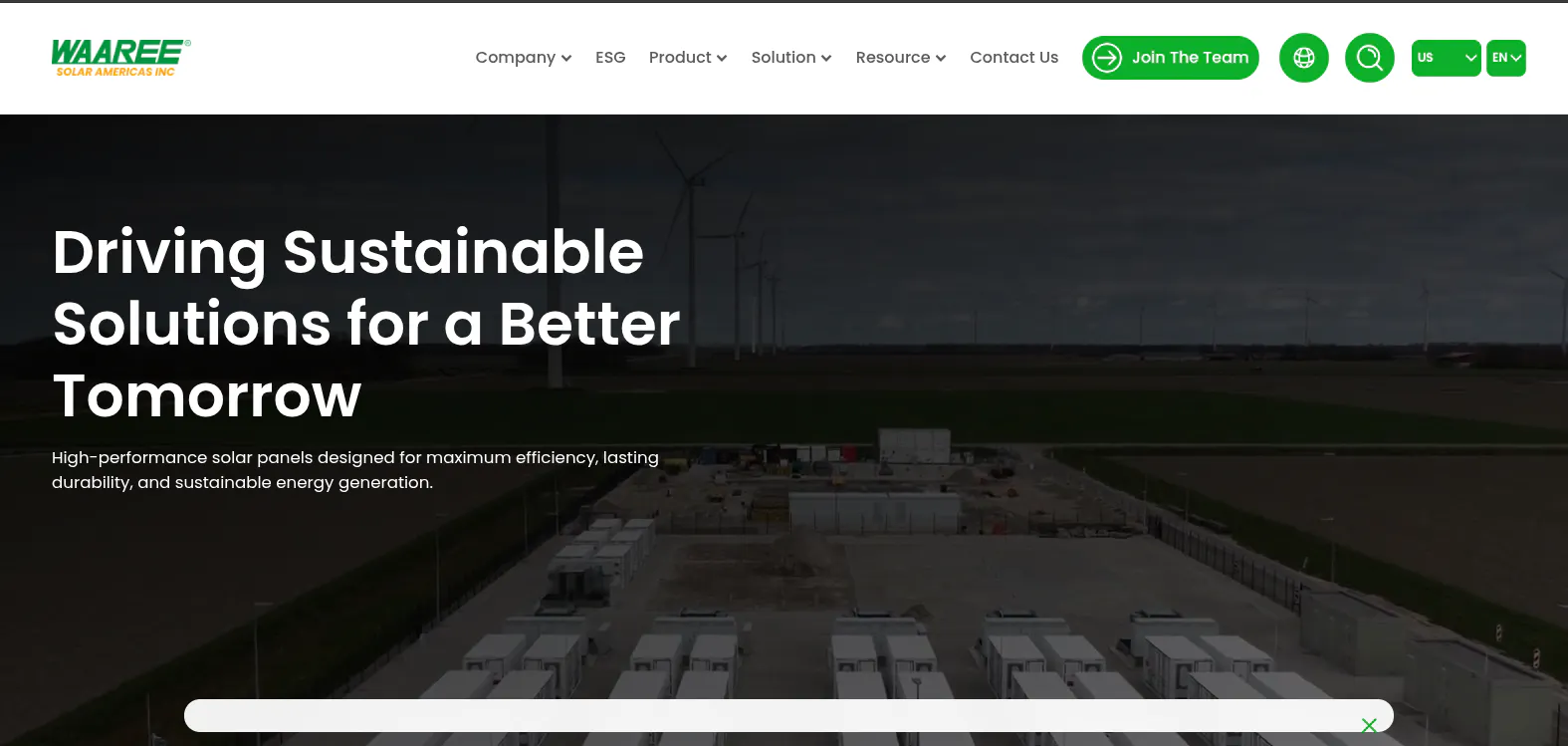
Waaree Energies is India's largest solar panel manufacturer, with 13.3 GW of operational capacity and Tier 1 status on Bloomberg's rankings for 35 consecutive quarters. Its U.S. presence centers on a new assembly plant in Brookshire, Texas, which puts American-made Waaree panels on the market alongside its India-built lineup.
Key specs: N-type bifacial dual-glass modules in the 540W to 585W range, built with half-cut cell technology for higher output per panel.
Warranty: 30-year performance warranty, with degradation capped at 1% in year one and 0.40% annually after that.
Best for: Larger residential and commercial installs where fewer, higher-wattage panels reduce racking and labor costs.
3. Astronergy

Astronergy is the solar subsidiary of the Chint Group, one of China's largest electronics manufacturers, founded in 2006. It runs 11 manufacturing bases and sells in more than 140 countries, ranking among the top 6 global manufacturers by 2024 shipment volume. Several Astronergy panel lines are sold with domestic content or assembled-in-USA status.
Key specs: N-type TOPCon bifacial panels ranging from 530W to 650W, using half-cut cells for better shading tolerance.
Warranty: 30-year performance warranty, with degradation limited to 2% in year one and 0.45% per year after, retaining at least 84.95% output after three decades.
Best for: Utility-scale and commercial ground-mount projects where bifacial gain and wholesale pricing matter most.
4. QCELLS
QCELLS was founded in Germany and acquired by South Korea's Hanwha Group in 2012, giving it a mix of German engineering and Korean manufacturing scale. Its U.S. manufacturing hub is based in Georgia, centered on an expanded facility in Dalton that the company describes as the most advanced solar supply chain in the Western Hemisphere. Bloomberg has named QCELLS the top brand for high-quality solar panels for three straight years.
Key specs: Q.ANTUM and Q.ANTUM DUO panels built on PERC technology, ranging from 400W to 485W, including bifacial and all-black residential options at roughly 20.4% efficiency.
Warranty: Industry-leading 25-year product and 25-year performance warranty.
Best for: Homeowners who want a brand with heavy U.S. manufacturing investment and strong warranty backing.
5. Mission Solar
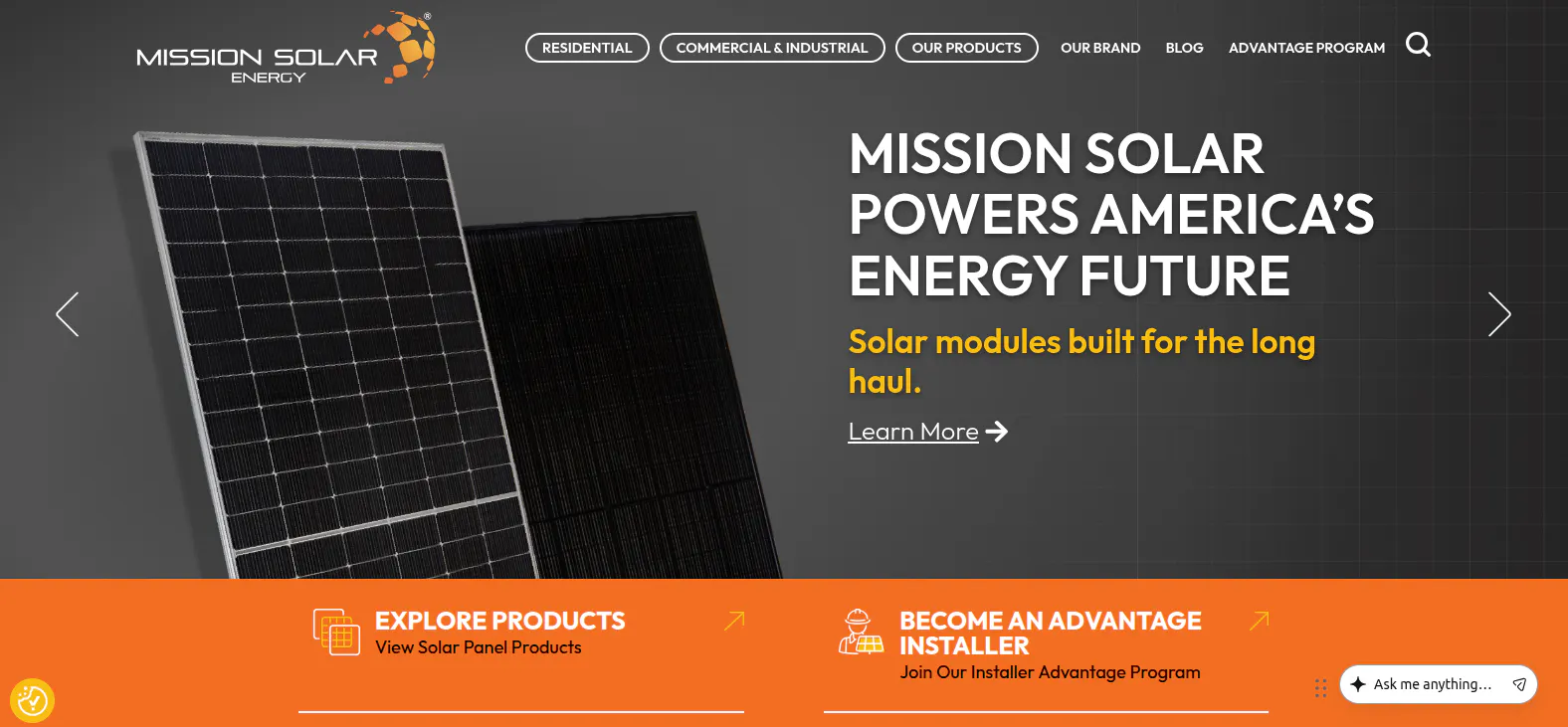
Mission Solar Energy is a fully domestic solar panel manufacturer based in San Antonio, Texas, operating since 2014. It's the 4th-largest manufacturing firm in San Antonio, with over 400 local employees and more than 800,000 modules shipped to date from its 300 MW facility. Every Mission Solar module is designed, engineered, and assembled on-site, making the brand Buy American Act compliant and exempt from Section 201 import tariffs.
Key specs: Monocrystalline panels using PERC and TOPCon cell technology, with efficiency in the 18% to 21% range, which trails some Chinese-made panels but comes with the tradeoff of full domestic manufacturing.
Warranty: 25-year performance warranty and 10-year product warranty, standard for U.S.-built modules.
Best for: Buyers who prioritize a fully U.S.-made panel and domestic content tax credit eligibility over squeezing out the last point of efficiency.
How to Choose Among Them
Start with what your roof and budget actually need before you pick a brand. A few things worth weighing:
- Efficiency vs. panel count: higher-wattage bifacial panels from Waaree or Astronergy mean fewer panels and less racking for the same output, which suits larger roofs and ground mounts.
- Domestic content credits: if you want the IRA's domestic content bonus, Mission Solar's fully U.S.-built panels are the safest bet, with some Canadian Solar and Astronergy lines also qualifying depending on the specific model.
- Warranty length and installer support: QCELLS and Waaree both offer 25 to 30 year performance warranties, which matters more over a system's lifetime than a percentage point of efficiency.
- Budget: Canadian Solar and Astronergy generally sit at more competitive price-per-watt tiers than QCELLS, which trades a higher price for its Georgia manufacturing base and brand reputation.
Final Thoughts
There's no single best American solar panel manufacturer. What you get depends on whether you're chasing full domestic content, maximum wattage per panel, or the strongest warranty on the market.
Canadian Solar and Astronergy cover the widest range of wattages and price points, Waaree brings serious bifacial output, QCELLS backs its panels with one of the strongest warranties in the industry, and Mission Solar is the one true 100% American-made option if that's the priority.
Compare warranties and specs against your roof size and budget before you buy, and confirm domestic content eligibility with your installer if you're counting on that tax credit.
FAQ
- What defines a top American solar panel manufacturer?
- A mix of U.S. manufacturing or assembly presence, strong product and performance warranties, financial stability, and independent certifications like IEC and UL testing.
- Are American-made solar panels more expensive than imported panels?
- Often yes, upfront, because of higher labor and facility costs. But shorter shipping, easier warranty claims, and domestic content tax credits can offset that over the system's lifetime.
- How can I verify a panel is actually made or assembled in the U.S.?
- Check the manufacturer's datasheet for the specific model, since brands like Canadian Solar and Astronergy sell both imported and U.S.-assembled versions of the same panel line. Ask your installer for documentation if domestic content credits are part of your plan.
- What warranty terms should I look for?
- Aim for a 25-year or longer performance warranty with a low annual degradation rate, backed by a 10 to 25 year product warranty from a manufacturer with solid financial standing.