Monocrystalline vs Polycrystalline: Which Solar Panel Is Right for You?
Installing solar energy equipment requires a significant upfront investment, but choosing an outdated type of solar panel can limit your system's power generation for decades. When investing in solar energy for your home or business, you will quickly face a choice between monocrystalline vs polycrystalline solar technology.
Choosing an ill-suited panel type can lead to higher long-term costs, wasted roof space, and disappointing electricity output. In this guide, we provide clear strategic guidance on the core differences between monocrystalline and polycrystalline panels, detailing their efficiency metrics, real-world durability, and practical financial returns so you can confidently request accurate solar quotes.
Monocrystalline vs Polycrystalline Panel Comparison
| Feature | Monocrystalline | Polycrystalline |
|---|---|---|
| Silicon Structure | Single continuous silicon crystal (Czochralski process) | Multiple melted silicon fragments cast into molds |
| Appearance | Uniform dark black with rounded cell edges | Speckled blue with square cell edges |
| Efficiency Rating | High: 20% to 23% (up to 25% for N-type modules) | Moderate: 15% to 18% |
| Power Output per Area | ~220W to 230W per square meter | ~160W to 180W per square meter |
| Degradation Rate | ~0.3% to 0.5% per year (~90% output retained after 25 years) | ~0.5% to 0.7% per year (~83% to 85% output retained after 25 years) |
| Best Suited For | Limited roof space, high-heat climates, maximum 25-year ROI | Ample space, ground-mounted utility arrays, strict initial budget |
What Are Monocrystalline and Polycrystalline Panels?
Every silicon solar cell relies on semi-conducting material to convert sunlight into usable electricity. The foundational difference between monocrystalline and polycrystalline options comes down to the crystal structure of monocrystalline cells compared to multi-crystal configurations.
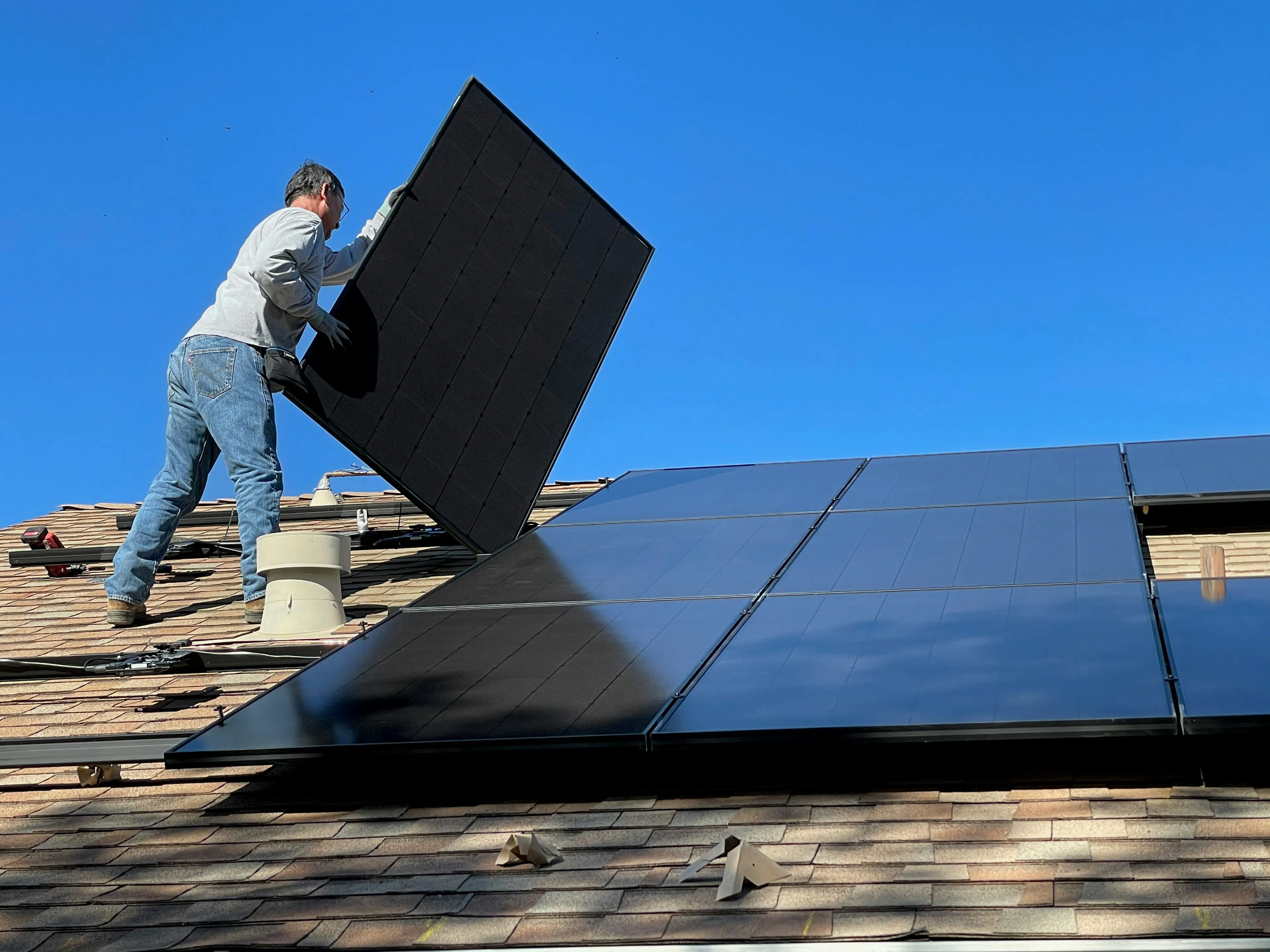
A monocrystalline solar cell consists of a single continuous silicon crystal. Because the single-crystal solar cells lack internal grain boundaries, electrons flow freely, creating an efficient monocrystalline cell. Visually, a monocrystalline panel features a sleek, uniform dark black appearance with rounded cell edges.
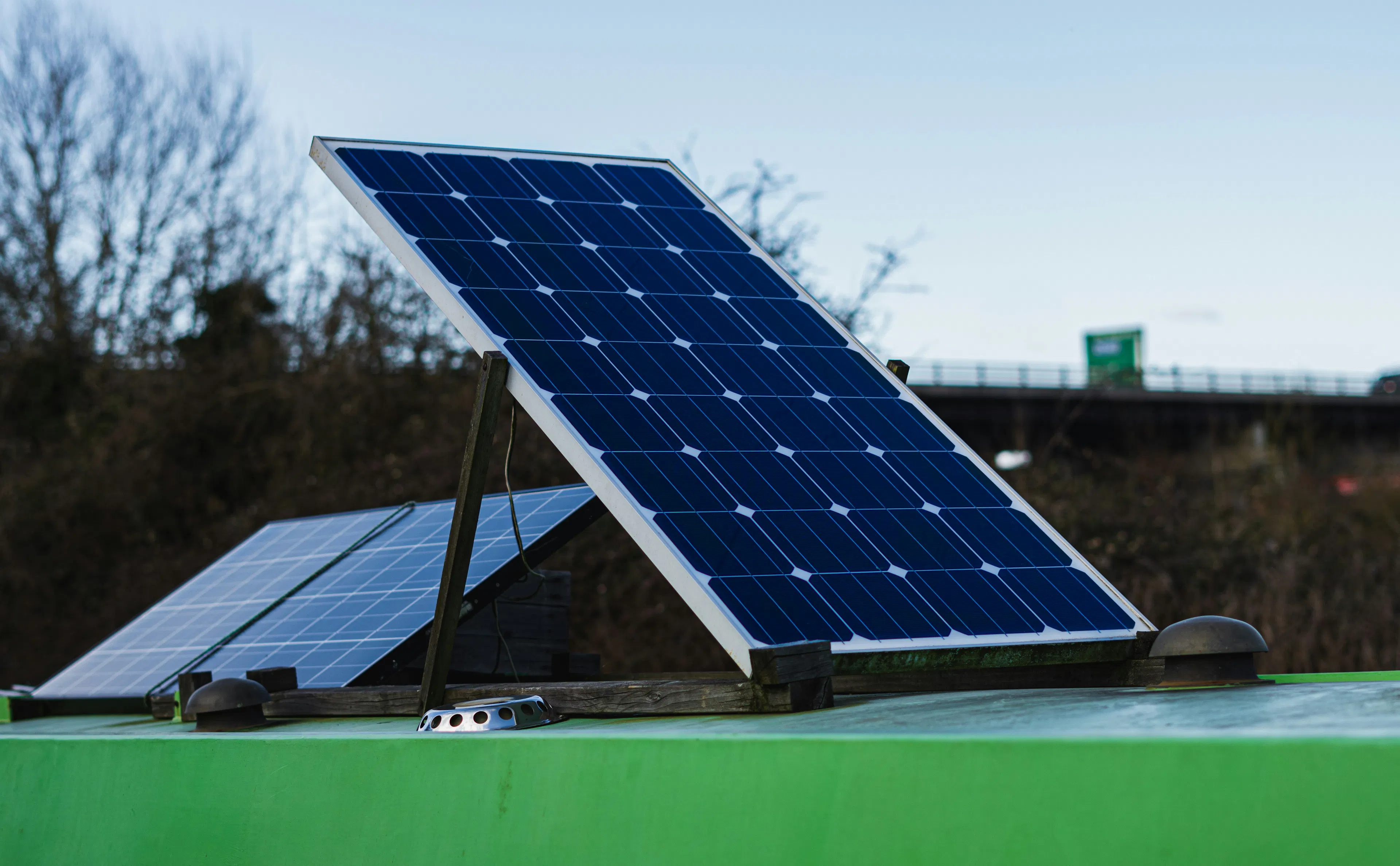
Conversely, polycrystalline solar panels are assembled using polycrystalline solar cells made from multiple fused silicon fragments. These polycrystalline silicon solar cells display a distinctive speckled blue appearance with square corners, reflecting the varied internal crystal orientations.
How They Are Made (Manufacturing Differences)
Manufacturing monocrystalline silicon production demands high purity and precise thermal controls. Producers employ the Czochralski process, placing a single seed crystal into molten silicon at roughly 1,420 degrees Celsius. The crystal is slowly pulled upward to form a cylindrical single-crystal ingot. Technicians then slice this cylindrical ingot into thin silicon solar wafers, trimming the rounded edges to maximize packing density on each mono solar panel.
Manufacturing polycrystalline silicon is simpler and uses less energy. Factories melt raw silicon fragments and pour them into square molds. As the molten silicon cools, multiple crystal structures form within the block. These blocks are sliced directly into square wafers for every polycrystalline panel. While this process generates less material waste and reduces production costs, the resulting grain boundaries impede electron movement, making polycrystalline cells less efficient than monocrystalline panels.
Efficiency and Energy Yield
The physical structure of monocrystalline wafers directly translates to superior solar panel efficiency. Standard monocrystalline solar panels achieve commercial efficiency ratings between 20% and 23%, with premium N-type designs reaching 25% efficiency. A typical 60-cell monocrystalline solar panel, like the SEG Solar 440W Solar Panel, yields between 370W and 400W.
Historically, polycrystalline solar panels reached efficiency levels of 15% to 18%, producing around 330W to 350W per panel. Because mono panels have a higher efficiency rating, you need fewer modules to reach your desired generation capacity. On a compact roof, monocrystalline solar panels are more efficient than polycrystalline panels because they generate significantly more kilowatt-hours per square meter.
Performance Under Real-World Conditions
Laboratory efficiency ratings do not fully capture how a solar panel operates under harsh environmental conditions. Sunlight quality, temperature swings, and partial shading heavily influence real-world output.
Monocrystalline panels maintain superior low-light sensitivity during cloudy weather or early morning hours. Laboratory solar cell research confirms that single-crystal silicon maintains stronger internal electric fields, capturing 5% to 7% more daily energy under diffuse light compared to polycrystalline pv cells.
Temperature tolerance also favors mono solar options. Monocrystalline models exhibit a temperature coefficient around -0.30% to -0.35% per degree Celsius above standard test conditions (25 degrees C). Polycrystalline models lose performance faster, with temperature coefficients between -0.40% and -0.45% per degree Celsius. When rooftop surface temperatures reach 65 degrees Celsius during summer, the performance of polycrystalline arrays drops noticeably.
Regarding shade, if one panel is shaded in a string, system-level performance drops regardless of cell chemistry unless you install power optimizers or microinverters. However, because monocrystalline cells output more total power per module, partial shading on an unoptimized mono array results in a higher absolute loss of energy.
Durability, Warranty, and Lifespan
Both monocrystalline and polycrystalline solar panels feature rugged tempered glass covers, anodized aluminum frames, and weatherproof backsheets designed to resist hail, wind loads, and salt mist.
However, internal silicon purity impacts long-term degradation rates. Premium monocrystalline solar panels experience an annual output loss of approximately 0.3% to 0.5%. After 25 years of operation, a quality mono array still operates at nearly 90% of its original factory output.
Polycrystalline panels tend to experience higher annual degradation, averaging 0.5% to 0.7% per year. Over 25 years, poly solar arrays retain about 83% to 85% of initial production. While both technologies easily pass standard IEC humidity and pressure tests, major solar panel manufacturers offer 25-year to 30-year linear performance warranties on monocrystalline options, compared to standard 25-year warranties on legacy poly panels.
Cost, Incentives, and Return on Investment
Upfront hardware pricing remains a primary factor when evaluating mono vs poly options. Raw monocrystalline solar panels are more expensive to produce, costing around $0.15 to $0.25 per watt for hardware, compared to $0.10 to $0.20 per watt for older polycrystalline silicon inventory.
For an average 6 kW home solar panel system, choosing poly solar hardware can save $300 to $600 initially. However, labor and racking costs scale with physical panel count. Because polycrystalline panels have a lower power rating per module, you need roughly 18 poly panels to match the output of 15 mono panels. Installing fewer mono panels reduces mounting hardware and installation labor, cutting the net price gap significantly.
Furthermore, modern incentives like the US federal solar tax credit apply equally to any qualifying solar panel installation, covering 30% of total equipment and labor expenses. Over a 25-year period, the higher energy yield and lower degradation of mono solar panels produce a lower Levelized Cost of Energy (LCOE), delivering superior return on investment despite the higher initial tag.
Environmental and Sustainability Considerations
Evaluating the environmental footprint of a solar panel system requires examining raw manufacturing energy alongside recyclability.
The Czochralski pulling process used for monocrystalline silicon production requires significant thermal energy, consuming 45 to 55 kWh of electricity per kilogram of purified silicon. Polycrystalline casting consumes up to 30% less energy during ingot formation.
However, because monocrystalline solar panels generate significantly more electricity over their operational lifetime, their energy payback time (the time required for a panel to generate the energy used to manufacture it) is nearly identical to polycrystalline models, averaging 1.0 to 1.5 years. Both panel types utilize recyclable glass and aluminum frames, though separating embedded silicon cells from EVA plastic encapsulants remains an industry-wide challenge.
Applications and Use Cases
Understanding where each solar panel type excels helps narrow down your choices:
- Residential Rooftops: Monocrystalline solar panels are the best solar choice for homes with limited roof area or strict homeowner association aesthetic standards.
- Commercial Buildings: Warehouses with massive flat roofs can utilize higher-efficiency mono panels to maximize power purchase agreement revenue or offset heavy industrial power loads.
- Utility-Scale Arrays: Ground-mounted solar systems traditionally utilized polycrystalline silicon solar cells to minimize initial equipment costs across acres of cheap land. However, modern utility developers have transitioned almost entirely to monocrystalline PERC and TOPCon modules to minimize racking and wiring overhead.
- Off-Grid & Portable Products: Compact off-grid cabins, RVs, and marine setups benefit directly from high-output mono panels where every square inch matters. While thin-film solar exists for ultra-flexible gear, rigid mono modules deliver far greater long-term durability.
How to Choose: Decision Checklist
Use this quick checklist to compare monocrystalline vs polycrystalline solar options for your property:
- Space Availability: If your roof space is tight, choose monocrystalline to maximize output per square foot.
- Climate Profile: In areas with high ambient summer heat, monocrystalline panels perform better due to lower temperature coefficients.
- Budget vs Lifetime ROI: If your initial budget is extremely constrained and space is unlimited, poly panels may offer short-term savings. If you prioritize 25-year energy production, mono wins.
- Visual Preferences: If you want an understated, uniform all-black roof layout, select monocrystalline panels.
- Manufacturer Reputation: Always compare warranty terms across installer proposals rather than relying on cell type alone.
Installation, Maintenance, and Troubleshooting
A successful solar panel installation depends on proper tilt angle, secure racking, and appropriate inverter sizing. Whether you choose mono or poly solar, keep these operational rules in mind:
- Avoid Mixing Panel Types: Never combine different solar panel types on the same string inverter circuit. Mixing mono and poly panels creates electrical mismatches that force the entire system to operate at the lowest module rating.
- Routine Cleaning: Clean your panels once or twice per year to remove dust, pollen, and bird dropping buildup. Accumulated grime can reduce light absorption by 5% to 10%.
- System Monitoring: Track your array's weekly production through your inverter app. Sudden drops in output across an individual solar panel usually signal physical shading, excessive dirt, or a tripped breaker rather than cell degradation.
Conclusion
The differences between monocrystalline and polycrystalline solar technologies center on efficiency, aesthetic integration, and long-term production. Monocrystalline options deliver higher efficiency ratings, superior heat tolerance, and extended lifetime energy yields, making them the industry standard for modern residential roofs. Polycrystalline options offer lower initial equipment costs, but require significantly more space for equivalent system output.
For most homeowners looking to maximize lifetime electric bill savings, monocrystalline solar panels offer the strongest overall return on investment.
To move forward, evaluate your total roof area, check your monthly energy consumption, and request quotes from certified local solar installers to review customized layout designs for your property.
FAQ
- Are monocrystalline panels always better than polycrystalline?
- Monocrystalline panels offer higher efficiency, superior heat performance, and a sleeker look, but they carry a higher initial price tag. Polycrystalline panels can suit large ground mounts with ample space and strict initial budget limits, though mono panels represent the vast majority of new installations.
- How much more efficient are monocrystalline panels compared to polycrystalline?
- Monocrystalline panels typically achieve 20% to 23% efficiency (up to 25% for N-type modules), whereas legacy polycrystalline panels range between 15% and 18%. This translates to a 20% to 30% higher power output per square meter for monocrystalline models.
- Do polycrystalline panels degrade faster than monocrystalline?
- Yes, polycrystalline panels tend to degrade slightly faster, losing about 0.5% to 0.7% of their output per year compared to 0.3% to 0.5% for monocrystalline panels. Over 25 years, a mono panel retains roughly 90% of its power, whereas a poly panel retains around 83% to 85%.
- Which panel type gives better value for a limited budget?
- If your installation area is unrestricted, polycrystalline panels offer a lower upfront cost per watt. However, because monocrystalline panels require less racking and labor, the overall system cost gap is small, often making mono panels a better long-term value.
- Can I mix monocrystalline and polycrystalline panels in one system?
- Mixing mono and poly solar panels on a single string circuit is not recommended. Mismatched voltages and current ratings reduce system efficiency and can cause premature wear unless individual microinverters or power optimizers isolate each module.